Every methodology stands on the shoulders of those who came before it.
Most leadership programmes end when the workshop finishes.
Participants leave inspired, but organisations are left asking one important question:
Did anything actually change?
Neural Architectural Calibration™ combines evidence-informed development with physiological measurement and reflective practice.
Using HeartMath® technology and our Live Human Performance Dashboard, organisations can observe selected physiological measures during practice and over time, providing an additional physiological reference point alongside subjective experience and reflective observation.
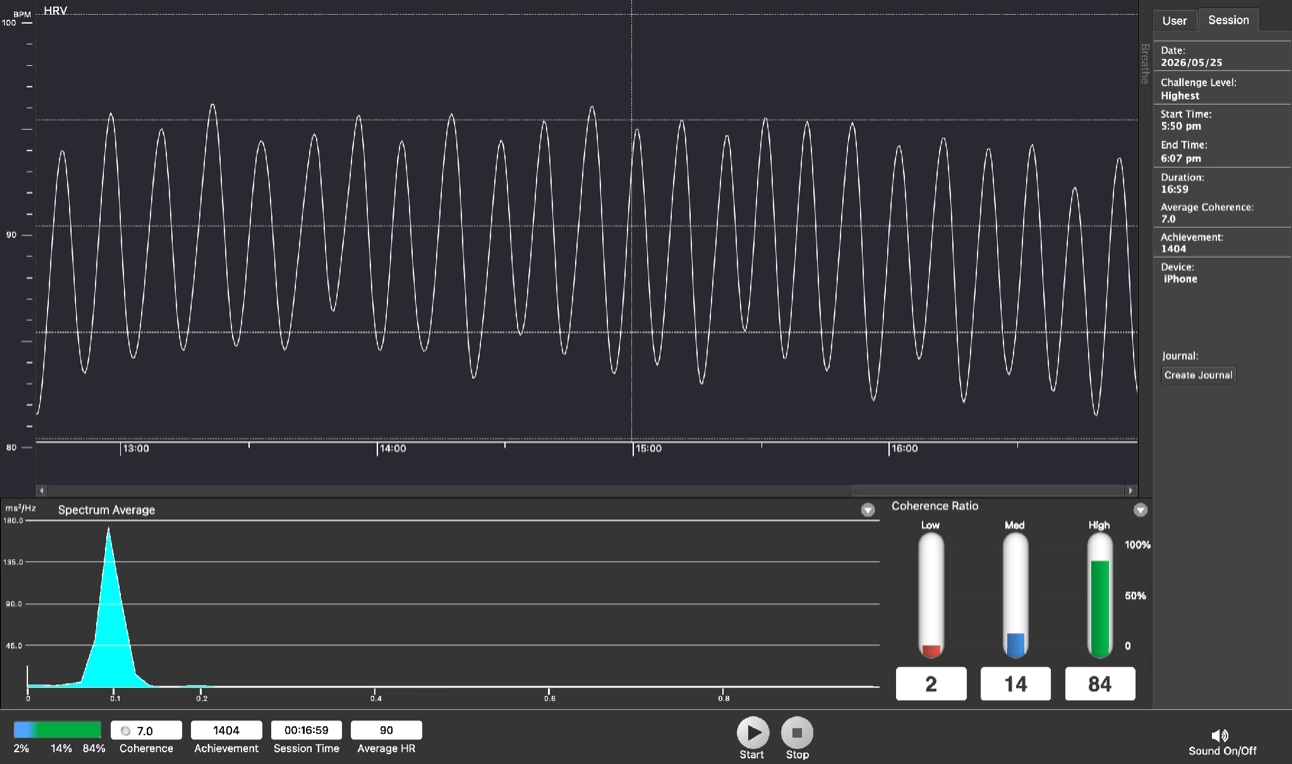
Alongside participant reflection and other forms of feedback, the platform provides real-time and longitudinal physiological data that can support observation of practice and development.
The dashboard enables organisations to monitor trends such as:
This provides an additional reference point for observing practice and development over time.
Traditional leadership programmes often measure attendance.
We can observe selected physiological measures during practice.
Traditional wellbeing initiatives may measure satisfaction and self-reported experience.
We can also observe selected physiological measures during practice.
Traditional coaching relies heavily on conversation.
Alongside participant reflection and other forms of feedback, the platform provides physiological data that can support observation of practice and development.
Heart-rate variability biofeedback and physiological regulation
Personal practice and exploration of meditation, attention and change
Focused intention and awareness
Leadership development and theory
Human behaviour and psychology
Systems and organisational development
Exploring attention, awareness and physiological regulation
Recognizing patterns and interconnectedness
Understanding how language shapes thought
Identifying systems and structures
Cultivating awareness and presence
Exploring neuroplasticity, learning and how repeated experience and practice can contribute to changes in patterns over time.
Exploring focused intention as a practice of directing attention toward chosen outcomes and states.
To apply this internal work effectively within the complex world of organizations, I delved deeply into leadership theory and human behaviour. The foundational efficacy principles of Stephen Covey and the profound focus on purpose and "Why" championed by Simon Sinek provided core structures for building high-performing cultures. Insights into memetics from Richard Brodie and the search for meaning in extreme circumstances articulated by Viktor Frankl added crucial dimensions to my understanding of what drives human action and resilience.
Helping leaders navigate high-stakes environments requires more than just intuition; it requires a mastery of strategic thinking and psychological influence. In this modality, I drew heavily from the tactical negotiation frameworks developed by Chris Voss, which are instrumental in learning to manage pressure and gain leverage in crucial conversations. This was complemented by studying the cognitive architecture of judgment under uncertainty outlined by Daniel Kahneman and Amos Tversky, as well as classical strategic principles from Sun Tzu.
Finally, recognizing that individuals and organizations do not operate in a vacuum necessitates an understanding of complexity and interconnected systems. In an increasingly uncertain world, the thinking of Nassim Nicholas Taleb on probability, "antifragility," and the impact of rare events reshaped my view of risk and stability. Furthermore, Professor Shoshana Zuboff's critical analysis of surveillance capitalism offered vital perspective on the invisible digital architecture that increasingly shapes modern human behavior.
Where these disciplines become one integrated methodology.
My journey was never about adopting one single philosophy or methodology. Instead, I began asking a different, unifying question:
What if each of these disciplines—from cellular biology to systems theory—described a different part of the same human operating system?
That question became the bedrock of Neural Architectural Calibration™.
Today, my work intentionally integrates principles from all these varied fields into a singular, practical methodology designed to help individuals and organisations develop greater awareness, regulation and capacity for choice.
Understanding the relationship between heart-brain coherence and emotional regulation.
Exploring neuroplasticity, identity, and the relationship between thought, emotion and behaviour.
Studying focused intention and the role of purposeful awareness in personal transformation.
Exploring how repeated experience, learning and practice can contribute to changes in patterns over time.
Where these ideas become one integrated methodology.
Each discipline addresses a different dimension of human performance. Neuroscience explains how patterns form. Heart-brain coherence provides the physiological foundation. Leadership theory applies to organisational contexts. Strategic thinking frameworks guide decision-making. Together, they create a comprehensive methodology that addresses physiology, cognition, emotion, and behaviour simultaneously.
Subjective experience alone can be misleading. Physiological data provides an objective reference point that can help participants observe aspects of their physiological response during practice. Changes in coherence measures can provide additional feedback on physiological response during practice. Where appropriate, organisational measures can be combined with programme data to evaluate progress against agreed development objectives.
Yes. The core practices work without biofeedback devices. However, biofeedback can provide real-time information that helps participants observe aspects of their physiological state during practice. HeartMath® sensors provide real-time feedback that can help participants observe changes in physiological coherence during practice. Biofeedback is a measurement and learning tool; the role and frequency of its use can vary according to the programme and individual practice.
Over 3 decades of study, practice, and refinement. The methodology emerged gradually as I integrated insights from multiple disciplines. Thousands of hours of meditation, formal training across various fields, and practical application with clients shaped the approach. It continues to evolve as new research emerges and client needs change.
Yes. The principles apply universally because they address fundamental human operating systems. Whether you're in healthcare, finance, education, manufacturing, or government, the same physiological patterns drive performance. The methodology adapts to specific industry contexts while maintaining core principles. Human performance is human performance, regardless of sector.
If something here resonates with you, I'd welcome the opportunity to explore where these principles could be applied — whether in leadership, organisational performance, human performance or collaboration.